

Buying rep sneakers and Getting the size right is is easy.
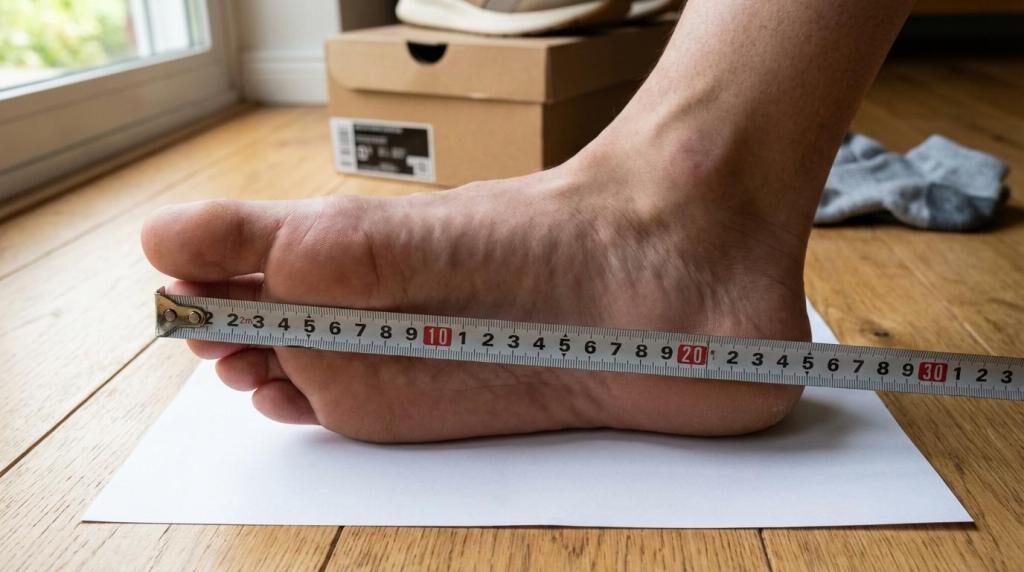
The problem is not your feet. It’s the chaos of US vs EU vs CM, mixed brand sizing grids (Nike is not Adidas), and the fact that certain silhouettes are built to fit snug or roomy on purpose. When you stack that on top of replicas, where batches can vary, sizing turns into a mini science project.
Why rep sneaker sizing feels inconsistent
A lot of people assume there’s one universal conversion for EU to US to CM. There isn’t.
Nike and Adidas literally map centimeter lengths to different US and EU numbers. That means two pairs with the same “28.0 cm” can show slightly different EU sizing depending on the brand chart you’re following. This is why “I’m always EU 44” can fail you.
On top of that, specific models have known fit personalities:
- some run snug in the toe
- some have thick padding that eats space
- some have long, pointy shapes that feel bigger even when the tag says your usual size
Replicas tend to follow the original model’s fit most of the time, but there are enough exceptions that you should treat sizing like a model-by-model call, not a one-size rule.
Start with centimeters (CM), because it’s the closest thing to truth
If you only remember one thing, remember this: CM is your anchor. US and EU are translations, and translations get messy.
Measure your foot length at home and shop from that number. If a product page gives a CM chart, you’re already ahead of most buyers.
Here’s a clean way to do it that matches what major brands recommend: put paper on the floor, stand normally, trace your foot, then measure from heel to the longest toe in centimeters. Do both feet and use the longer one.
After you measure, keep these quick rules in mind:
- Measure at night: feet swell during the day, and you want the real-world size.
- Wear your usual socks: thin socks vs thick socks can change the pick.
- Round up when you’re on the edge: if you’re 27.2 cm, shop like you’re 27.5 cm.
That last one saves more “why do my toes hate me?” moments than any conversion chart.
EU to US to CM: the part nobody tells you
People ask for “the” conversion table, but the better move is to pick the right grid for the brand family:
- Nike/Jordan grid for Air Jordan, Dunk, Air Force 1, most Nike runners
- Adidas grid for Yeezy 350 V2, 700, most Adidas-based pairs
Even when the difference looks tiny on paper, it can be the difference between “perfect” and “I can’t wear these for more than 20 minutes.”
Quick reference conversion table (common men’s sizes)
This table shows how the same CM length can translate differently depending on Nike vs Adidas charts.
| Foot length (CM) | Nike US | Nike EU | Adidas US | Adidas EU |
|---|---|---|---|---|
| 25.0 | 7.5 | 40.5 | 8 | 41 1/3 |
| 26.0 | 8.5 | 42 | 8.5 | 42 |
| 27.0 | 9.5 | 43 | 9.5 | 43 1/3 |
| 28.0 | 10.5 | 44 | 10.5 | 44 2/3 |
| 29.0 | 11.5 | 45 | 11.5 | 46 |
If you’ve ever wondered why your “EU 44” in one brand feels different in another, that’s the reason. The grid is not identical.
Popular rep sneakers: sizing cheat codes that actually work
This is the street-level part: what people usually experience on the most-bought silhouettes.
Air Jordan 1 (High, Low)
Jordan 1s are usually true to size for most feet, and reps commonly follow that pattern.
If you like a locked-in feel, stick TTS. If you’ve got wider feet or you hate toe pressure, going up half a size can feel nicer without looking sloppy.
One sentence reality check: AJ1 comfort depends more on your insole choice than people admit.
Nike Dunk (Low)
Dunks often feel a touch snug because of padding and the way the upper sits, especially around the forefoot.
Most people can still go true to size, but if you’re between sizes, that half size up is rarely a bad call.
Air Force 1
AF1s have a reputation for fitting big because the toe box has space and the shoe is chunky.
Many buyers size down half for that clean fit. If you want room for thicker socks, stay TTS.
Yeezy 350 V2
The 350 V2 is the poster child for “runs small.”
The knit upper hugs. The toe can feel tight. For a lot of people, half size up is the move, and wide-foot buyers sometimes go a full size up.
If your foot length is already close to the top of a CM bracket, do not play tough. Size up.
Yeezy 700
The 700 tends to be more forgiving than the 350 V2, but it still depends on the version and your foot shape.
Many wearers go true to size in 700s, while others prefer half up for comfort. If you like your sneakers roomy, half up is usually safe.
New Balance 550
The 550 is often true to size, but it can feel a bit narrow in the toe box.
If you’re wide-footed, consider half up. If you’re normal width, TTS is usually money.
Balenciaga Triple S
Triple S fits big and bulky. Many people size down.
You want it to look oversized, not feel like you’re wearing boats.
After you pick your model, use these fast “between size” rules:
- Stay true to size
- Half size up
- Half size down
- Wide feet: bias toward more room
- Narrow feet: bias toward snug
How to use Repsgoat’s product size guides without getting played
Repsgoat doesn’t publish a single site-wide conversion chart. Instead, the sizing guidance lives on each product page with item-specific size info. That’s not a bad thing, because model-specific is what you want anyway.
Here’s how to read those per-item guides like you know what you’re doing:
- Don’t shop by EU only: use the CM or insole length when it’s provided.
- Match the shoe’s brand family: Nike-style pairs should “feel” like Nike sizing, Adidas-style pairs should “feel” like Adidas sizing.
- Treat half sizes as strategy: if a model is known to run tight (hello, 350 V2), half up is not optional.
Repsgoat also does QC photos before dispatch, which is huge for spotting obvious issues early. QC pics won’t magically tell you fit, but they help you verify you’re getting the right pair and labeling before it leaves.
If you’re stuck between two sizes, contacting support with your foot length in CM is the fastest way to get a clean recommendation without vague “I’m usually a 10” back and forth.
Common sizing traps (and how to dodge them)
The sneakiest sizing problems aren’t even about US vs EU. It’s the small details that catch people.
Here are the big ones:
- Men’s vs women’s sizing: US women’s is often about 1.5 sizes higher than men’s for the same foot length.
- Grade school (GS) sizing: looks like men’s numbers but fits differently and can be narrower.
- Sock choices: thick socks can turn a “perfect” into “pain.”
- Wide feet: charts don’t care about width, your toes do.
If you want a simple “do this, not that” check, run this mental list before you order:
- Foot length (CM): measured, not guessed.
- Model fit rep: snug, true, roomy.
- Your fit preference: locked-in or relaxed.
- Season: winter socks change the game.
A practical sizing workflow you can repeat every time
Don’t rely on vibes. Use a repeatable method, and you’ll be right way more often.
- Measure both feet in CM and use the longer measurement.
- Pick the brand grid that matches the model (Nike/Jordan vs Adidas/Yeezy).
- Apply the model’s known fit tendency (TTS, half up, half down).
- Confirm with the product page’s item-specific size guide.
- If you’re still unsure, message support with your CM measurement and the model name.
That process sounds strict, but it saves money and time, especially when you’re ordering internationally and you want the first delivery to be the final answer.
What if you already ordered the “wrong” size?
If the pair hasn’t shipped yet, act fast. Most sellers can help more before dispatch than after.
Repsgoat pushes fast handling (often within 48 hours) and ships worldwide quickly, so waiting around is how mistakes lock in. If you realize you picked the wrong size, contact support immediately with your order info and the size you want switched to.
And if your pair shows up and the fit is off, don’t panic and trash the shoe with a bad first wear. Try an insole swap, switch sock thickness, and lace it differently. Small changes can flip a “barely wearable” into a daily pair.
Sizing is not about being lucky. It’s about being consistent, using CM as your base, and respecting that a Yeezy 350 V2 does not move like an AJ1.
[…] sizing recommendations and reviews before purchasing. For comprehensive advice, check out our rep sneaker sizing guide to ensure you find the perfect fit and comfort in your Jordan 4 […]
[…] For broader sneaker knowledge, visit the sneaker guides section, and for sizing help, consult the rep sneaker sizing guide. To discover more about trusted sources, check out the top replica shoe websites. Finally, if you […]
[…] Sizing Issues : Follow seller sizing charts and read fit feedback before ordering. For detailed help, refer to the rep sneaker sizing guide. […]
[…] a spreadsheet) to track prices, shipping costs, and return terms. For sizing concerns, refer to the rep sneaker sizing guide to ensure the best fit when ordering replicas […]