

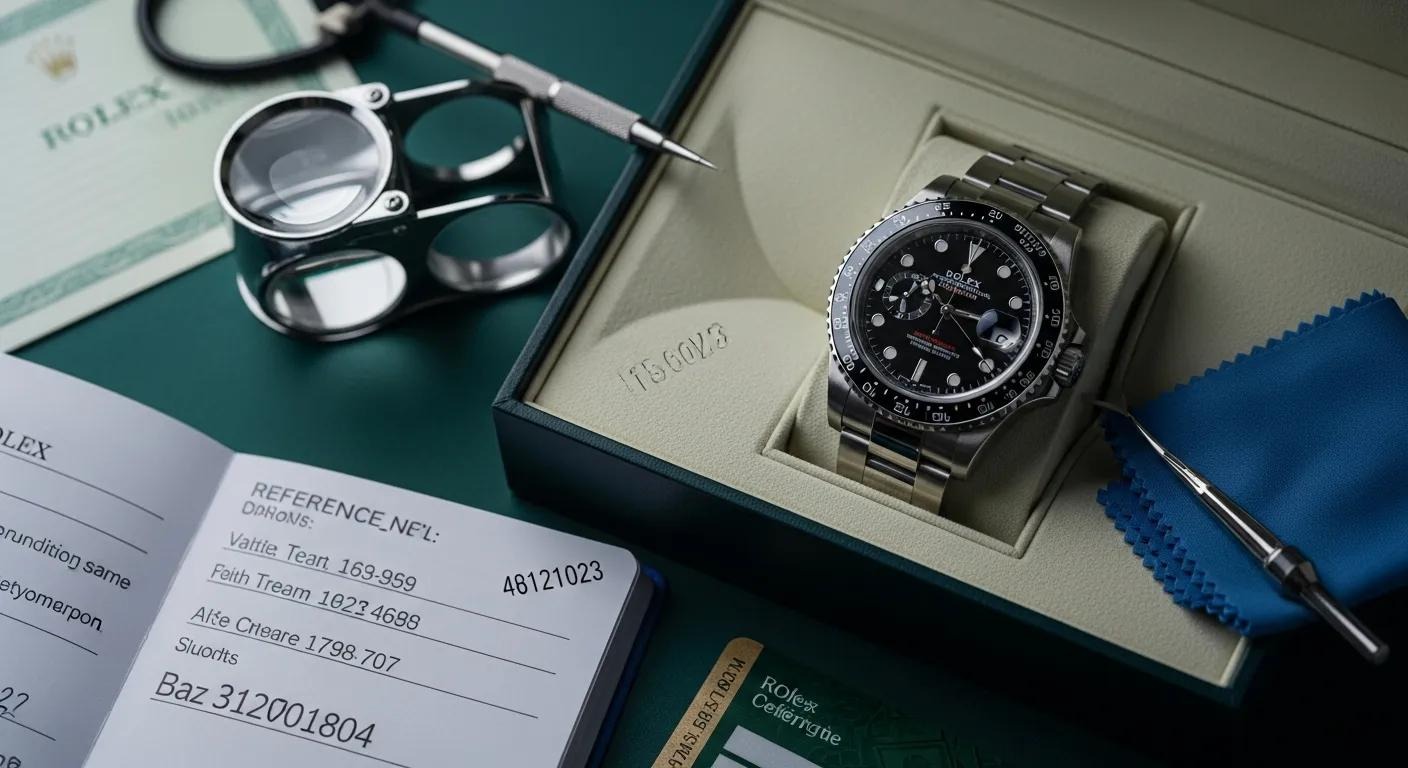
Knowing how to spot a fake Rolexis one of the most valuable skills any watch buyer, seller, or enthusiast can have. The fake Rolex market is vast and complex, with counterfeiters constantly improving their techniques to mimic genuine models. The counterfeit watch market generates billions of dollars annually, and Rolex is by far the most counterfeited luxury watch brand in the world. Whether you’re evaluating a pre-owned Submariner, a Datejust at an estate sale, or a Daytona on an online marketplace, these 15 expert authentication signs will give you a decisive edge in identifying fake Rolex watches.
In this guide, we cover every major tell — from the ones you can spot in seconds to the technical checks that require tools or professional inspection. By the end, you’ll have the knowledge to identify fake Rolexes across all major references and understand the evolving sophistication of counterfeiters in 2026.
Why the Fake Rolex Market Thrives and How to Spot a Fake Rolex
Rolex produces approximately 1 million watches per year. Estimates suggest the counterfeit market produces 10–40 million fake Rolex watches annually. That disparity means the secondary market is saturated with fakes at every price tier — from $20 street fakes to $1,000+ super clones that fool even experienced collectors on first inspection.
According to Wikipedia’s overview of counterfeit goods, watch counterfeiting is a multi-billion-dollar global industry with the majority of production concentrated in China, though distribution networks span every continent. The fake Rolex market is particularly lucrative due to the brand’s iconic status and high demand.
Understanding why Rolex is a primary target helps frame what to look for. The brand’s instantly recognizable crown logo, consistent design language across decades, and enormous brand recognition mean that even low-quality fakes carry perceived value to uninformed buyers. That’s the counterfeiters’ business model. For more detailed insights, exploring resources like how to know if a Rolex is original can deepen your understanding of authenticity markers. Additionally, the official Rolex website offers valuable information on genuine models and authorized dealers.
Spotting Fake Rolexes: 15 Tell-Tale Authentication Signs 2026
Sign 1: The Second Hand Sweep
This is the single most important test you can perform without any tools. A genuine Rolex runs on a high-frequency automatic movement (Rolex calibres operate at 28,800 vibrations per hour — 8 beats per second). This produces a near-continuous, fluid sweep of the second hand, which appears to glide smoothly around the dial without visible ticks. Most fake Rolex watches use quartz movements (which tick once per second) or low-grade mechanical clones (which tick 4–6 times per second, producing visible stepping). Holding the watch steady and observing the second hand for 30 seconds can reveal these differences.
In real-world authentication, this test is often the first step and can quickly eliminate many budget and mid-range fakes. However, some high-end replicas have improved their sweep to mimic genuine movements, so this test is necessary but not always sufficient. Expert collectors often combine this with other signs to confirm authenticity. For those interested in the nuances of movement quality, resources on best quality fake Rolex watches provide detailed comparisons of movement smoothness. Practically, when observing the second hand, look for a smooth, almost gliding motion rather than a ticking or jerky movement. If you can hear ticking sounds, it is almost certainly a fake.
Sign 2: The Cyclops Lens Magnification
On Rolex models with a date window (Datejust, Submariner Date, GMT Master II, etc.), the Cyclops lens magnifies the date 2.5x and keeps it perfectly centered and legible. On fake Rolex watches, this magnification is almost always 1.5x or less, the date appears fuzzy or off-center, and the lens itself may show distortion at the edges. This is one of the fastest tests — just look at the date window from directly above.
In practice, counterfeiters sometimes attempt to replicate the Cyclops lens but fail to achieve the correct magnification or clarity. The lens on genuine Rolex watches is made from sapphire crystal with precise curvature, while fakes often use cheaper glass or plastic. For those interested in specific model fakes, the fake Rolex Datejust buyer’s guide offers detailed examples of Cyclops lens discrepancies and how to spot them. When inspecting, ensure the date fills the entire lens area and is sharply focused; any blurriness or reduced size is a red flag.
Sign 3: The Case Finishing
Rolex applies alternating brushed (satin) and polished (mirror) surfaces to their cases with razor-sharp precision. The contrast between brushed lug tops and polished lug flanks should be absolutely crisp and well-defined. Fakes either over-polish the entire case or apply the wrong surface to the wrong zone, resulting in a less refined appearance. Running your fingernail across the lug reveals a distinctly different texture on top versus the sides on genuine Rolex cases.
In real-world scenarios, case finishing is a subtle but telling sign, especially when combined with other indicators. High-end replicas may mimic finishing well but often lack the tactile precision and sharp transitions found on authentic models. The edges on genuine Rolex cases are sharp and well-defined, whereas fakes tend to have softer, rounded edges. For a deeper understanding of finishing quality, examining best replica Rolex watches can help calibrate expectations. When possible, compare the watch side-by-side with a known genuine model to feel the difference in finishing quality.
Sign 4: Dial Print Quality
Examine the dial text through a 10x jeweler’s loupe. On a genuine Rolex, every character — the brand name, model designation, ‘OYSTER PERPETUAL’ text, and serial lume plots — is produced to tolerances measured in microns. Characters are crisp, uniform in weight, and perfectly spaced. On fake Rolex dials, ink bleeding, inconsistent font weights, text that looks slightly raised or offset, and spacing irregularities are all common.
This test alone eliminates the majority of budget and mid-range fakes. In practice, dial print quality is one of the most reliable visual cues, as counterfeiters struggle to replicate the microscopic precision of Rolex’s printing processes. For a deeper dive into dial authenticity, resources on best quality fake Rolex watches provide comparative images and analysis that highlight these subtle differences. Pay special attention to the font style and alignment of text, as even slight deviations can indicate a fake.
Sign 5: The Solid Caseback
All modern Rolex watches have a solid, non-transparent Oyster caseback. If a watch presented as a Rolex has a see-through exhibition caseback, it is not a genuine Rolex — full stop. Counterfeiters add see-through casebacks because buyers associate visible movements with quality and craftsmanship. In reality, Rolex uses solid casebacks on all current production, including the Submariner, Datejust, GMT Master, and Daytona. The only exceptions are certain limited vintage references.
This is a straightforward test that can be performed without tools and is a quick way to eliminate many fakes. For those interested in specific models, the replica Rolex Submariner market often features fakes with incorrect casebacks, making this a critical check. Additionally, the engraving on the caseback of genuine Rolex watches is minimal or absent, whereas some fakes have excessive or incorrect markings. When inspecting, look for a clean, unadorned caseback with a smooth finish.
Sign 6: Serial and Reference Engravings
Between the case lugs at 6 o’clock sits the serial number; at 12 o’clock sits the reference number. On a genuine Rolex, these are laser-engraved with extraordinary precision — deep, crisp, perfectly uniform characters. On fake Rolex watches, engravings are frequently shallow, sandblasted-looking, or printed. You’ll need to remove the bracelet end links (using a spring bar tool) to inspect these.
Mismatched serial numbers that don’t align with the reference’s known production window are also an immediate red flag. Cross-referencing serial numbers against publicly available Rolex production year databases helps verify consistency. In practice, this step requires some technical skill but is invaluable for serious buyers and collectors. The quality of engraving is often overlooked by casual buyers but is a hallmark of genuine Rolex craftsmanship. When possible, use a magnifying glass to inspect the depth and clarity of the engravings.
Sign 7: The Crown and Triplock System
The winding crown on a genuine Rolex has a precisely engraved crown logo on its tip and raised lines at its base indicating the Twinlock or Triplock sealing system. It should screw down smoothly and firmly with 3–4 rotations, creating an audible click when fully engaged. On fake Rolex watches, the crown logo is often blurry or incorrectly proportioned, the screw-down action is loose or sticky, and the crown tip may be a different size than specification.
In real-world authentication, testing the crown’s feel and function is essential, especially for dive models like the Submariner. The crown’s sealing system is critical for water resistance, and counterfeiters often neglect this functional detail. The Triplock system features three dots or a line under the crown logo, which is often missing or poorly replicated on fakes. When testing, ensure the crown screws down tightly without resistance or looseness, and listen for the distinct clicks that indicate proper engagement.
Sign 8: Weight and Heft
Genuine Rolex watches are substantially heavy. A Submariner on its full bracelet weighs approximately 155–160 grams. A Datejust on Oyster bracelet weighs 140–160 grams depending on configuration. Fake Rolex watches use cheaper alloys, thinner case walls, and hollow bracelet links that feel noticeably lighter. Picking up any Rolex and immediately comparing the heft to expectation can reveal discrepancies. If it feels like a costume jewelry piece, it almost certainly is.
Weight is a practical and immediate test that can be combined with visual inspection for a more comprehensive evaluation. Some high-end replicas have improved weight by using heavier materials, but subtle differences remain detectable to experienced collectors. When possible, compare the watch’s weight to a known genuine model or use a precision scale for measurement.
Sign 9: Bracelet Quality and Clasp Action
Rolex uses 904L Oystersteel — a marine-grade alloy that is both harder and denser than the 316L steel used in most counterfeit watches. This translates directly to bracelet quality: individual links should have no side-play or rattle, the clasp should open and close with a firm, defined click, and the Oysterlock or Easylink mechanism (on modern references) should function precisely.
Fake Rolex bracelets often rattle, flex, and have loosely fitting clasps. Our guide to best replica Rolex watches shows what high-end replica bracelets look like — useful for calibrating your expectations. In practice, bracelet quality is a tactile and visual indicator that can be assessed with experience. Additionally, the engraving and stamping inside the clasp on genuine Rolex watches are crisp and precise, whereas fakes often have poor-quality markings. When inspecting, open and close the clasp multiple times to feel the smoothness and firmness of the mechanism.
Sign 10: Lume Plot Consistency
The lume applied to Rolex hour markers and hands should glow consistently in darkness — all the same color (typically green or blue, depending on generation) and all the same brightness level. On fake Rolex watches, lume plots are frequently uneven in brightness, different shades between markers, or clearly hand-applied with visible brush strokes under magnification.
Rolex applies lume using precision machines with exacting controls, ensuring uniformity. In real-world use, checking lume consistency requires a dark environment and sometimes a loupe, but it is a reliable authenticity indicator, especially for vintage and sports models. Some counterfeiters use inferior lume materials that fade quickly or do not glow at all. When testing, charge the lume under a bright light source and observe the glow in a dark room, noting any inconsistencies.
Sign 11: Water Resistance Test
This test requires professional equipment: a pressure tester. A certified watchmaker can test whether the watch achieves its stated water resistance (100m for Datejust, 300m for Submariner, etc.). Fake Rolex watches almost universally fail water resistance tests because their case gaskets and crown sealing systems do not meet specification.
If you’re buying a watch at significant cost, requesting this test as part of a pre-purchase inspection is entirely reasonable. This test is definitive for dive watches and those marketed for water sports, where genuine Rolex engineering is critical. Many counterfeit watches have poorly sealed cases that allow moisture ingress, damaging the movement. While this test is not accessible to most buyers, it is a crucial step for professional authentication.
Sign 12: Micro-Etched Crown in Crystal
From approximately 2002 onward, Rolex etched a microscopic Rolex crown logo at the 6 o’clock position of the sapphire crystal. It is invisible to the naked eye under most conditions but visible under magnification or when angled under bright direct light. This feature is extremely difficult and expensive to replicate.
Its absence on a watch claimed to be a post-2002 Rolex is suspicious; its presence is a strong authenticity indicator. In practice, this micro-etched crown is a subtle but powerful sign, often overlooked by counterfeiters and casual buyers alike. Some high-end replicas attempt to mimic this feature but often fail to achieve the same clarity or precision. Using a loupe or microscope, tilt the watch under a bright light to locate this tiny crown.
Sign 13: The Rolex Rehaut (Inner Bezel Ring)
Since approximately 2003–2005 depending on reference, Rolex engraves ‘ROLEX ROLEX ROLEX’ continuously around the inner bezel ring (the rehaut — the sloped ring between the dial and crystal). This engraving is laser-etched with microscopic precision. On fake Rolex watches, this text is frequently missing, incomplete, poorly spaced, or only partially present.
Under a loupe, the genuine engraving has perfectly consistent character dimensions across its entire circumference. This feature is a relatively recent addition to Rolex’s anti-counterfeiting measures and is a reliable visual test for models produced in the last two decades. Some counterfeiters have improved this feature, but inconsistencies remain detectable to trained eyes. Additionally, the serial number is often engraved on the rehaut in genuine models, which can be cross-checked with the case engraving.
Sign 14: Bezel Action (Submariner, GMT, Daytona)
For models with a functional bezel — the Submariner’s unidirectional 60-minute bezel, the GMT Master II’s bidirectional bezel, or the Daytona’s tachymeter bezel — the action and click system matters. A genuine Rolex Submariner bezel clicks in 120 precise, equal positions per revolution. Each click is crisp and defined.
Fake Rolex bezels typically click in 60 positions (half the precision) and feel scratchy, uneven, or loose. The bezel insert on a genuine Submariner has perfectly applied ceramic or aluminum indices with no glue residue around the edges. In real-world authentication, bezel feel and precision are tactile tests that require some experience but are highly effective in distinguishing genuine from fake. Additionally, the alignment of the bezel markers with the dial indices is precise on genuine models but often off on fakes. When testing, rotate the bezel slowly and listen for the consistent clicking sound and feel the smooth, firm resistance.
Sign 15: Professional Movement Inspection
The definitive authentication method. A certified watchmaker opens the caseback and inspects the movement. Genuine Rolex calibres are immediately distinguishable: finished with Cotes de Geneve decoration, fitted with Rolex’s signed rotor, and engraved with reference markings on the movement plate.
Cloned movements, regardless of quality, cannot replicate Rolex’s movement architecture and decoration precisely. This inspection also reveals whether a genuine case has been fitted with a non-genuine movement — a common fraud in high-quality franken watches. While this method requires professional expertise and equipment, it is the only way to conclusively verify authenticity, especially for high-end super clone fake Rolex watches. For buyers serious about authenticity, this step is indispensable and often performed during service or pre-purchase inspections.
For complete model-specific authentication guidance on identifying fakes across individual references, our companion resources cover how to know if a Rolex is original, the fake Rolex Datejust buyer’s guide, and replica Rolex Submariner details.
How to Spot a Fake Rolex in 2026: The Evolving Threat
The fake Rolex market has evolved dramatically in recent years. Counterfeiters now employ advanced manufacturing techniques, including CNC machining, laser engraving, and even cloned Swiss movements, to produce super clone fake Rolex watches that are visually and mechanically convincing. These high-tier replicas can pass many traditional visual and tactile tests, making them increasingly difficult to detect without professional tools and expertise.
In 2026, the sophistication of fake Rolex watches means that buyers must be more vigilant than ever. The use of genuine 904L steel in some replicas, sapphire crystals, and near-perfect case finishing challenges even experienced collectors. Additionally, counterfeiters have improved the quality of micro-etched crowns and rehaut engravings, which were once reliable tell-tale signs. This evolving threat underscores the importance of combining multiple authentication methods and, when in doubt, seeking professional verification.
For those interested in exploring the replica market for educational comparison purposes, you can shop replica watches across multiple tiers to see how closely high-end replicas approach genuine specifications. Understanding the nuances of these evolving fakes helps buyers and enthusiasts stay informed and avoid costly mistakes. Moreover, resources like how much does a fake Rolex cost provide insight into pricing trends and the range of counterfeit quality available. Staying updated on these developments is crucial for anyone involved in the Rolex market.
Protecting Yourself When Buying a Rolex
Purchasing a Rolex watch, especially a pre-owned or vintage model, requires careful consideration and due diligence to avoid falling victim to fake Rolex scams. First, always buy from reputable dealers or authorized Rolex retailers. The Rolex official website provides a list of authorized sellers worldwide, ensuring you receive genuine products with valid warranties.
When buying from secondary markets, such as online platforms or estate sales, request detailed photographs, including close-ups of the dial, caseback, serial numbers, and movement if possible. Ask for proof of authenticity, service history, and original paperwork. If the price seems too good to be true, it probably is.
Consider having the watch inspected by a certified watchmaker or Rolex Authorized Service Center before completing the purchase. Professional authentication can save you from costly mistakes and provide peace of mind. Additionally, familiarize yourself with common fake Rolex signs outlined in this guide and related resources to perform preliminary checks yourself.
Finally, keep records of your purchase, including receipts and authentication reports. This documentation is valuable for insurance, resale, and potential legal recourse if fraud is discovered. Protecting yourself when buying a Rolex involves a combination of knowledge, caution, and professional support. Remember, investing time in verification upfront can prevent significant financial loss and disappointment later.
Frequently Asked Questions
What is the single fastest way to spot a fake Rolex?
The single fastest way to spot a fake Rolex is the second hand sweep test. Genuine Rolex movements beat at 28,800 vibrations per hour, producing a near-fluid sweep of the second hand with no visible stepping. Most fake Rolex watches use quartz movements or low-frequency mechanical clones that produce visible ticks. This test requires no tools and can be performed in under 30 seconds, eliminating a significant portion of counterfeit watches quickly. However, for high-end replicas, additional tests are recommended.
Can jewelers detect fake Rolexes?
Yes, experienced jewelers and certified watchmakers can detect fake Rolex watches through a combination of visual inspection, tactile assessment, and professional tools. They can examine dial print quality, case finishing, engravings, movement authenticity, and water resistance. Jewelers with access to pressure testers and magnification equipment can perform comprehensive evaluations that go beyond casual visual checks. Their expertise is invaluable for buyers seeking assurance.
Are there fake Rolexes that pass all visual tests?
Yes, high-tier super clone fake Rolex watches can pass all standard visual tests, including second hand sweep, Cyclops magnification, dial print quality, and case finishing. These replicas often use cloned Swiss or high-grade Chinese movements, genuine 904L steel, and sapphire crystals. Definitive authentication for these watches requires professional movement inspection and examination of micro-etched features under magnification. Buyers should be cautious and seek expert verification when dealing with such sophisticated fakes.
What should I do if I already bought a fake Rolex?
If you suspect you have purchased a fake Rolex, the first step is to seek professional verification from an authorized Rolex service center or certified watchmaker. If confirmed fake, do not attempt to sell it as genuine, as this constitutes fraud. Document your purchase and contact the seller with the authentication report. Depending on the circumstances, legal recourse or credit card chargebacks may be options. Disposing of or donating a confirmed counterfeit is often the safest course to avoid personal liability.
Which Rolex models are most frequently counterfeited?
The most frequently counterfeited Rolex models include the Submariner, Datejust, GMT Master II, and Daytona. These models are highly popular, iconic, and in demand, making them prime targets for counterfeiters. Each model has specific authentication markers, and detailed guides such as the replica Rolex Submariner and fake Rolex Datejust buyer’s guides provide model-specific insights to help identify fakes effectively.